
Forbes Connections Hint Today is a popular search phrase among word-puzzle fans who want a little help with the daily Connections game. When sixteen words are sitting on the screen and several of them seem to belong together, finding the right groups can be harder than it first appears.
Connections is a daily word puzzle from The New York Times. Players must divide sixteen words into four groups of four, with each group sharing a hidden connection. Forbes publishes daily coverage of the game, including clues and answers, which is why many players search for Forbes Connections hints when they need assistance.
The good news is that a hint doesn’t have to ruin the fun. In fact, a well-used clue can help players understand how the puzzle works, discover new word relationships, and become better solvers over time.
This guide explains what the search term means, how the puzzle works, how to use hints without seeing unwanted spoilers, and which strategies can help you solve challenging boards with greater confidence.
What Does Forbes Connections Hint Today Mean?
The phrase forbes connections hint today generally refers to searches for Forbes’ daily coverage of the New York Times Connections puzzle.
It doesn’t normally mean that Forbes has created a separate word game called Connections. Instead, Forbes provides editorial content about the daily NYT puzzle. Its coverage can include:
- Hints for the four categories
- Clues for individual groups
- One example word from each category
- Full answers
- Comments about the puzzle
- Explanations of difficult connections
- Advice for players who are stuck
Forbes has published recurring Connections coverage by writers such as Kris Holt, who covers video games and word games.
This distinction is important because someone searching for today’s hints wants to make sure they’re looking at the correct puzzle. Connections changes every day, so a clue from yesterday may be completely useless today.
How the Connections Puzzle Works
Connections looks simple, but don’t let its clean design fool you. The game is built around word association, logic, vocabulary, and careful observation.
A typical puzzle gives you 16 words. Your job is to arrange them into four groups of four.
Each group has a shared relationship.
For example, imagine a fictional puzzle contains these words:
| Word | Possible Relationship |
|---|---|
| Mars | Planet |
| Venus | Planet |
| Earth | Planet |
| Saturn | Planet |
| Piano | Musical instrument |
| Guitar | Musical instrument |
| Violin | Musical instrument |
| Trumpet | Musical instrument |
In a real puzzle, the connections are often much less obvious. Some words may appear to fit several categories, creating what puzzle players commonly call red herrings.
The objective isn’t simply to find four words that seem related. You need to find the exact intended relationship.
Why Today’s Hints Can Be So Helpful
Searching for forbes connections hint today can be useful when you’re close to solving the puzzle but can’t quite identify the final relationship.
A good hint gives your brain a new direction without necessarily handing over the answer.
For example, suppose four words seem connected to animals, but you’re not sure why. A clue might suggest that the group relates to “things associated with a particular animal.”
That small nudge may be enough.
And that’s the beauty of a hint: it can create the “aha!” moment while allowing you to complete the puzzle yourself.
Hints are especially useful when:
- You have already found one or two groups.
- Two categories seem to overlap.
- One group contains a difficult word.
- You are down to the final eight words.
- You understand the words but not the intended connection.
- You want help without seeing the complete solution.
Understanding the Four Connection Categories
Connections traditionally uses four groups with different levels of difficulty. The colors commonly associated with the groups help communicate difficulty.
| Color | General Difficulty | What to Expect |
|---|---|---|
| Yellow | Easiest | Clear or familiar connection |
| Green | Moderate | Requires some thought |
| Blue | Challenging | Often based on knowledge or wordplay |
| Purple | Hardest | Frequently involves unusual or clever connections |
These difficulty levels aren’t a guarantee that every player will find the same group easiest. Someone with strong sports knowledge, for example, might solve a sports-related category quickly while another player finds it difficult.
That’s why it’s wise to avoid assuming that the purple category is impossible. Sometimes the hardest-looking group suddenly becomes obvious once you see the trick.
How to Use Forbes Connections Hint Today Without Spoilers
Not everyone wants the complete answer immediately. Many players simply want a gentle push.
If that’s you, use a progressive hint strategy.
Start with the weakest assistance and move forward only when necessary.
Begin With the Category Idea
First, look for a broad clue.
Ask:
- Is the category about food?
- Is it about places?
- Is it related to entertainment?
- Is it based on a phrase?
- Is it about a type of object?
- Is it connected to a person’s name?
- Is it based on word structure?
Once you have the general idea, return to the sixteen words.
Look for Four Strong Matches
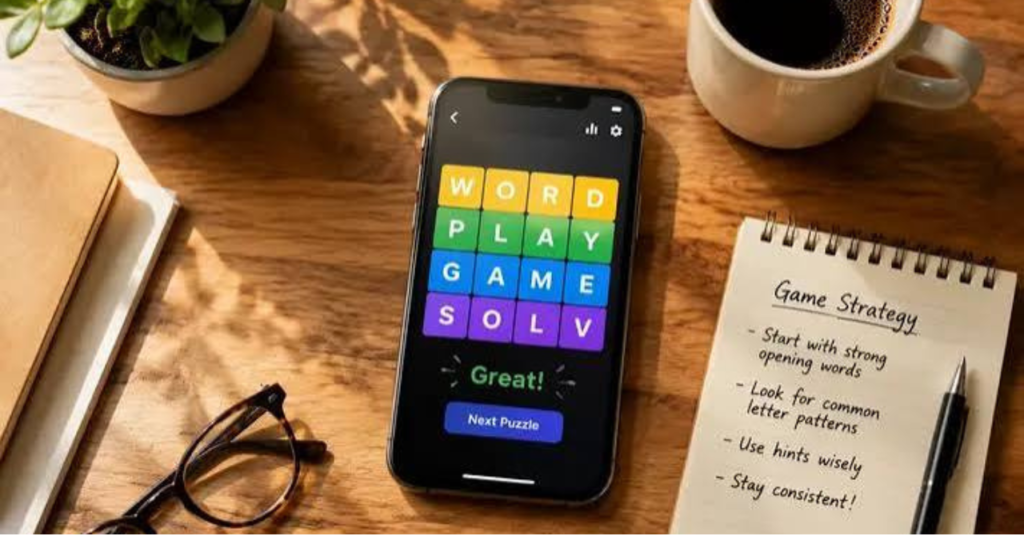
Forbes Connections Hint Today After receiving a category clue, don’t immediately choose the first four words that appear related.
Instead, ask whether exactly four words fit.
This is important because Connections intentionally includes misleading possibilities.
Use a Stronger Hint If Necessary
If the broad clue isn’t enough, look for a more specific clue.
For example:
Think of something associated with a particular sport.
That may narrow the field considerably without revealing every answer.
Save the Answers for Last
Full solutions are useful when you’re completely stuck, but they’re best treated as a last resort.
If you reveal everything too early, you lose the opportunity to practice your own reasoning.
The Biggest Trick: Watch Out for Red Herrings
One of the most important skills in Connections is recognizing misleading relationships.
Suppose you see five words that appear to belong to the same theme.
That should make you pause.
Why?
Because a valid category normally contains four words.
The fifth word may be there specifically to make you think the category is correct when it isn’t.
For example, four words could be types of clothing while a fifth word is something commonly worn with clothing. Your brain naturally wants to put them together, but the puzzle may have a different plan.
Don’t fall into the trap.
Instead, ask:
“What is the most precise connection between these four words?”
That question can save you from many mistakes.
A Smart Step-by-Step Method for Solving Connections
You don’t need lightning-fast thinking to become good at Connections. A consistent process can make a huge difference.
Scan All Sixteen Words
Don’t immediately start selecting words.
Read every word first.
Look for:
- Repeated ideas
- Similar meanings
- Common phrases
- Names
- Places
- Brands
- Animals
- Food
- Sports
- Entertainment references
- Word patterns
Your first scan gives you the big picture.
Find the Most Obvious Group
Start with the category that seems strongest.
If four words clearly belong together and there isn’t a strong fifth candidate, that’s a promising group.
Remove Those Words Mentally
Once you’ve identified a likely group, focus on the remaining twelve words.
This reduces mental clutter.
Search for Another Relationship
Now repeat the process.
Look for words that share:
- A meaning
- A phrase
- A category
- A spelling pattern
- A cultural reference
- A common word before or after them
Save the Weirdest Words for Later
Don’t worry if four words seem completely mysterious.
The final category is often the most creative one.
As the board gets smaller, the relationship may become much easier to see.
Common Types of Connections Categories
A major advantage of playing regularly is learning the kinds of categories that puzzle creators like to use.
Here are some common possibilities.
Synonyms
Several words may have similar meanings.
For example, a group might contain words meaning “angry,” “quick,” or “large.”
Things With the Same Prefix
Four words may become related when the same word is placed before them.
Things With the Same Suffix
The same idea can work in reverse, with a shared word placed after each answer.
Names of People
Words may refer to famous people, fictional characters, or names used in popular culture.
Foods and Drinks
Some groups involve ingredients, dishes, cooking terms, or beverages.
Entertainment
You might encounter:
- Movie titles
- TV characters
- Songs
- Actors
- Musicians
- Video-game terms
Geography
Words can be connected to:
- Cities
- Countries
- States
- Rivers
- Landmarks
- Regions
Wordplay
This is where things can get tricky.
A category might depend on spelling, pronunciation, double meanings, or a phrase.
These categories often create the biggest “aha!” moments.
Why Connections Is More Difficult Than It Looks
At first glance, Connections seems like a simple matching game.
However, the real challenge comes from multiple possible relationships.
A single word can belong to several themes.
For example, a word might be:
- An animal
- A sports team name
- A character
- Part of a common phrase
- A verb
- A brand name
That flexibility creates uncertainty.
You aren’t merely asking whether four words are related. You’re asking whether they are related in the specific way intended by the puzzle creator.
That’s a much tougher challenge.
How to Avoid Losing Attempts
Connections gives players limited mistakes, so every guess matters.
Before submitting a group, use this checklist:
- Do all four words fit naturally?
- Is there a possible fifth word?
- Is the relationship specific enough?
- Could one word belong to another obvious group?
- Does the category explain all four words equally well?
- Are you choosing the group because it makes sense, or because you want it to make sense?
That last question is surprisingly important.
Sometimes players become attached to their first theory. Once that happens, they start forcing words into the category.
When that occurs, take a step back.
The Value of Looking at Today’s Forbes Coverage
Searching for forbes connections hint today can save time when you need reliable puzzle guidance.
Forbes’ Connections articles typically follow a helpful progression, moving from the puzzle itself toward hints and then answers. Recent Forbes coverage has included the sixteen words, category hints, individual examples, and full solutions.
This format is useful because readers can stop before reaching information they don’t want.
If you only need one clue, you don’t necessarily have to read the entire solution.
That’s a good approach for players who want assistance while keeping most of the challenge intact.
A Practical Example of Hint-Based Solving
Let’s imagine a fictional board contains these sixteen words:
- Mercury
- Venus
- Mars
- Jupiter
- Piano
- Guitar
- Drum
- Violin
- Apple
- Orange
- Banana
- Mango
- Blue
- Red
- Green
- Yellow
A player could quickly identify three obvious categories:
Planets: Mercury, Venus, Mars, Jupiter
Musical instruments: Piano, Guitar, Drum, Violin
Fruits: Apple, Orange, Banana, Mango
The remaining four are colors.
Real Connections puzzles are rarely this easy, of course. The words are often selected specifically to make the categories overlap.
But the example demonstrates the basic principle: each group must have a shared relationship.
How to Improve Your Vocabulary Through Connections
Connections isn’t only about winning.
It can also be a useful vocabulary exercise.
When you encounter a word you don’t know, look up its meaning after the puzzle. Then consider why the creator used it.
This can help you learn:
- New words
- Idioms
- Cultural references
- Historical terms
- Names
- Slang
- Multiple meanings
- Common expressions
Over time, your vocabulary becomes broader, which can make future puzzles easier.
In other words, today’s difficult word could become tomorrow’s advantage.
How Connections Can Build Better Thinking Skills
Daily word puzzles encourage several useful mental habits.
Pattern Recognition
You learn to notice similarities that aren’t immediately obvious.
Flexible Thinking
If your first theory fails, you must change direction.
Attention to Detail
Small differences between words can determine whether a category works.
Memory
Cultural references and vocabulary often depend on information you’ve encountered before.
Problem Solving
The game requires you to test possibilities, reject weak ideas, and build a stronger solution.
That’s why Connections can be more than a five-minute distraction.
Common Mistakes New Players Make
Even experienced players occasionally make these mistakes.
Choosing a Group Too Quickly
A group may look obvious but contain a trap.
Ignoring the Odd Word
One unusual word may be the key to the entire puzzle.
Assuming Categories Must Be Literal
Sometimes the connection is based on language rather than meaning.
Using Hints Too Early
If you check the complete answer immediately, you miss an opportunity to improve.
Refusing to Change Your Mind
A wrong theory is still wrong, even if you’ve spent five minutes defending it.
Be flexible.
Tips for Faster Daily Solving
If you want to improve your solving time, practice these habits.
Read before guessing. Give yourself a few seconds to understand the entire board.
Look for exact relationships. Broad similarities are often traps.
Start with confidence. Find the strongest group first.
Think about phrases. Ask whether words can follow or precede another word.
Consider multiple meanings. A word can have more than one identity.
Use elimination. Every correct group makes the remaining puzzle easier.
Don’t panic. A difficult board doesn’t mean you’re bad at puzzles.
Sometimes the puzzle is simply designed to be tough.
Why Daily Puzzle Habits Are So Popular
There is something satisfying about completing a small challenge every day.
A daily puzzle offers a clear beginning and ending. You sit down, think for a few minutes, and hopefully finish with that satisfying feeling of solving something difficult.
Players may also enjoy:
- Maintaining a solving streak
- Comparing results with friends
- Learning new words
- Sharing difficult categories
- Testing themselves against previous performances
- Taking a short mental break
The search for forbes connections hint today is part of that larger daily puzzle culture.
How to Use Hints as a Learning Tool
The best players don’t simply use hints to get answers.
They study them.
After solving the puzzle, ask yourself:
Why didn’t I see that connection?
Maybe the category depended on a phrase you didn’t recognize.
Maybe one word had a second meaning.
Maybe a red herring distracted you.
Maybe you focused too much on a literal interpretation.
Understanding your mistake is more valuable than simply knowing the answer.
That’s how hints can turn into genuine improvement.
A Simple Daily Routine for Better Results
You can build a short routine around the puzzle.
| Stage | What to Do | Goal |
|---|---|---|
| First scan | Read all 16 words | Understand the board |
| First search | Find obvious relationships | Identify strong groups |
| Second search | Test less obvious links | Find hidden categories |
| Careful check | Look for red herrings | Avoid mistakes |
| Submit | Choose your strongest group | Reduce risk |
| Repeat | Work with remaining words | Narrow possibilities |
| Review | Study missed categories | Improve future solving |
This method is simple, but consistency is the key.
What Makes a Good Connections Hint?
A useful hint should guide rather than completely solve.
The best hints are:
- Clear
- Short
- Accurate
- Relevant
- Appropriately vague
- Easy to understand
- Helpful without unnecessary spoilers
For example, saying “These four are types of fruit” gives strong guidance while still requiring the player to identify the words.
Giving all four answers, on the other hand, removes most of the challenge.
Both types of information have their place, but players should choose the level of help that matches their goal.
Frequently Asked Questions About Forbes Connections Hint Today
Is Forbes Connections a separate game?
Usually, the phrase refers to Forbes’ coverage of the New York Times Connections puzzle rather than a separate Forbes-owned puzzle. Forbes publishes daily articles discussing Connections hints and answers.
Why does the word “today” matter?
Connections changes every day. A date-specific search helps you find the correct puzzle instead of accidentally reading yesterday’s clues.
Should I use hints every day?
There’s nothing wrong with using hints. However, try solving independently first. A small nudge can help you learn more than immediately reading the complete answer.
What should I do if two categories seem possible?
Look for the most precise relationship. If a word can fit two groups, check whether one category has another word that fits better.
Is using a hint cheating?
Not necessarily. Many players use hints as learning aids. If your goal is to improve, try to use the smallest amount of help necessary.
Why do some Connections puzzles feel much harder?
Puzzle difficulty can vary because categories may involve wordplay, cultural knowledge, double meanings, or misleading relationships.
How can I get better?
Play regularly, review your mistakes, learn unfamiliar words, and pay attention to the kinds of connections that repeatedly fool you.
Final Thoughts on Forbes Connections Hint Today
The search for forbes connections hint today reflects something simple: people enjoy solving puzzles, but sometimes everyone needs a little nudge.
Connections rewards patience, flexible thinking, vocabulary, and careful observation. The best strategy isn’t always to find the fastest answer. Sometimes it’s to slow down, question your assumptions, and look at the words from a different angle.
Forbes’ daily Connections coverage can be useful for players who want clues, explanations, or complete answers, particularly when they are stuck on a difficult board. Recent Forbes articles show a spoiler-friendly structure that moves from the puzzle to hints and then toward the complete solution.
So, the next time you’re staring at sixteen stubborn words, don’t throw in the towel. Start with the obvious connections, watch for red herrings, test each theory carefully, and use hints only when you need them.
Most importantly, enjoy the process. Every difficult puzzle is another chance to sharpen your thinking.
Whether you’re a beginner looking for your first clue or an experienced player trying to protect a long streak, forbes connections hint today can be a useful starting point for smarter, calmer, and more enjoyable Connections solving.