
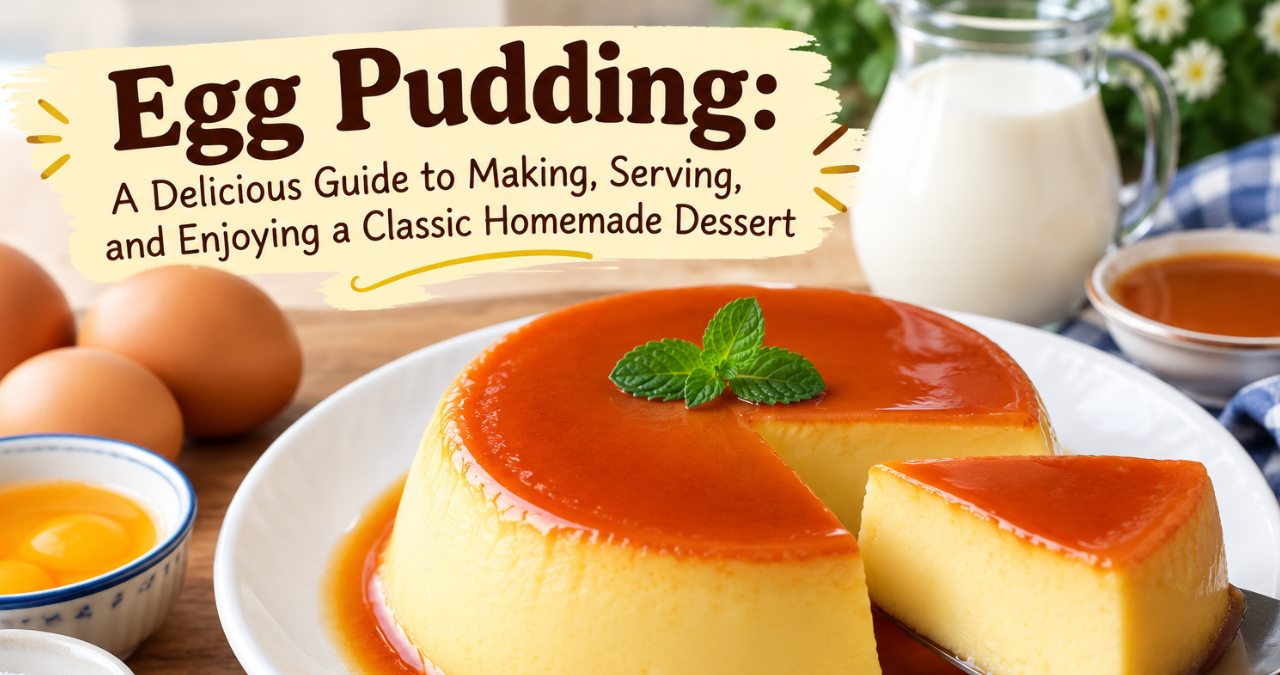
egg pudding is a smooth, creamy, and comforting dessert enjoyed in many parts of the world. Made with simple ingredients such as eggs, milk, sugar, and vanilla, this classic sweet dish proves that you don’t need a long list of ingredients to create something special. Its soft texture and gentle sweetness make it suitable for family meals, celebrations, afternoon treats, and quiet evenings at home.
At first glance, egg pudding may seem like a simple dessert. However, making a truly silky pudding requires some care. The temperature, mixing method, cooking time, and ingredient balance can all affect the final result. When prepared correctly, the pudding should be tender, creamy, and rich without becoming rubbery or watery.
This guide explores everything readers need to know about egg pudding. From its basic ingredients and preparation methods to helpful cooking tips, serving ideas, storage advice, common mistakes, and variations, this article provides a practical and easy-to-follow overview. So, let’s get started and discover why this humble dessert continues to win hearts around the table.
What Is Egg Pudding?
Egg pudding is a custard-style dessert in which eggs are combined with milk and sugar and then gently cooked until the mixture becomes firm and creamy. Depending on the recipe, it may be steamed, baked, or cooked using a water bath.
Eggs are the key ingredient because they help the pudding set. When eggs are heated gently, their proteins change structure and create the soft body of the custard. Milk adds creaminess, while sugar provides sweetness. Vanilla or other flavorings can give the pudding a pleasant aroma.
The finished dessert can be served warm, chilled, or at room temperature. Some versions are topped with caramel, fresh fruit, whipped cream, nuts, or a light sprinkle of cinnamon.
One of the best things about this dessert is its simplicity. With a few everyday ingredients and a little patience, home cooks can prepare a delicious treat without complicated equipment.
Why Egg Pudding Is So Popular
There are plenty of reasons why egg pudding remains a favorite homemade dessert.
First, it uses ingredients that many families already have in their kitchens. There’s no need to hunt down unusual products or expensive ingredients.
Second, its texture is wonderfully comforting. A properly cooked pudding feels soft and smooth on the tongue. It isn’t too heavy, yet it can still satisfy a sweet craving.
Another reason is its flexibility. The basic recipe can be changed in many ways. For example, cooks can add vanilla, coconut, chocolate, coffee, fruit, or spices.
Here are some advantages of making pudding at home:
- It requires simple ingredients.
- It can be prepared without advanced cooking skills.
- It can be served warm or cold.
- It works well for family gatherings.
- It can be customized with different flavors.
- It can be prepared in individual cups or one large dish.
- It can be made ahead of time.
- It is an excellent way to enjoy a traditional homemade dessert.
In short, egg pudding is a classic for good reason.
Main Ingredients Used in Egg Pudding
A basic pudding doesn’t require much. The quality and balance of the ingredients, however, matter a great deal.
| Ingredient | Main Purpose | Helpful Tip |
|---|---|---|
| Eggs | Help the pudding set | Use fresh eggs when possible |
| Milk | Creates a creamy texture | Whole milk gives a richer result |
| Sugar | Adds sweetness | Adjust according to taste |
| Vanilla | Adds aroma and flavor | Pure vanilla extract works well |
| Salt | Balances sweetness | Use only a tiny amount |
| Caramel | Adds color and rich flavor | Avoid burning the sugar |
Eggs
Eggs are the foundation of this dessert. They provide structure and richness. Fresh eggs can give the pudding a pleasant flavor and smooth appearance.
However, too many eggs can make the pudding firm or eggy. That’s why the egg-to-milk ratio is important.
Milk
Milk creates the creamy liquid base. Whole milk usually gives a richer result, but other types of milk may also be used depending on the recipe.
Milk should be fresh and properly stored. Heating it gently helps create a better custard.
Sugar
Sugar sweetens the pudding and can also contribute to its color. White granulated sugar is commonly used, although some recipes use brown sugar for a deeper flavor.
Vanilla
Vanilla isn’t always necessary, but it can make a noticeable difference. Its warm aroma helps balance the natural taste of eggs.
Caramel
Caramel is a popular addition. Sugar is heated until it melts and develops a golden-brown color. It is then placed in the pudding mold before the custard mixture is added.
Caramel brings a slightly bitter, rich flavor that works beautifully with the mild sweetness of the pudding.
How to Make Egg Pudding at Home
Making egg pudding isn’t difficult, but gentle cooking is the name of the game. Rushing the process can lead to problems with texture.
Prepare the Caramel
If you’re making caramel pudding, begin by melting sugar in a clean pan over medium-low heat.
The sugar will slowly melt and change color. Keep a close eye on it because caramel can go from golden to burnt surprisingly fast.
Once it reaches a golden amber color, carefully pour it into your pudding mold.
Be cautious because hot caramel can cause serious burns.
Mix the Eggs and Sugar
Crack the eggs into a bowl and add the sugar.
Mix gently until the ingredients are combined. Avoid beating the mixture too aggressively because excessive air can create bubbles in the finished pudding.
The goal isn’t to whip the eggs. You’re simply combining them.
Add the Milk
Gradually add milk to the egg mixture while stirring gently.
If the milk is warm, allow it to cool slightly before combining it with the eggs. Very hot milk can begin cooking the eggs before you are ready.
Add Vanilla
Add a small amount of vanilla extract. Stir gently until everything is evenly combined.
Strain the Mixture
For an extra-smooth pudding, pour the mixture through a fine strainer.
This step removes small pieces of egg and helps create a silky final texture.
It may seem like a small detail, but it can make a world of difference.
Pour Into the Mold
Pour the custard mixture carefully over the caramel.
If you see bubbles on the surface, gently remove them with a spoon or allow the mixture to sit briefly.
Cook Gently
The pudding can be baked or steamed depending on the recipe.
When baking, a water bath is especially helpful. Place the pudding mold inside a larger baking dish and add hot water around it. The water creates gentle, even heat.
This method helps prevent the outside of the pudding from cooking too quickly while the center remains undercooked.
Cool and Chill
After cooking, allow the pudding to cool.
If you’re serving it cold, place it in the refrigerator for several hours. Chilling helps the pudding become firmer and makes the flavor more refreshing.
When ready to serve, loosen the edges with a thin knife and carefully turn the pudding onto a plate.
The Secret to Smooth Egg Pudding
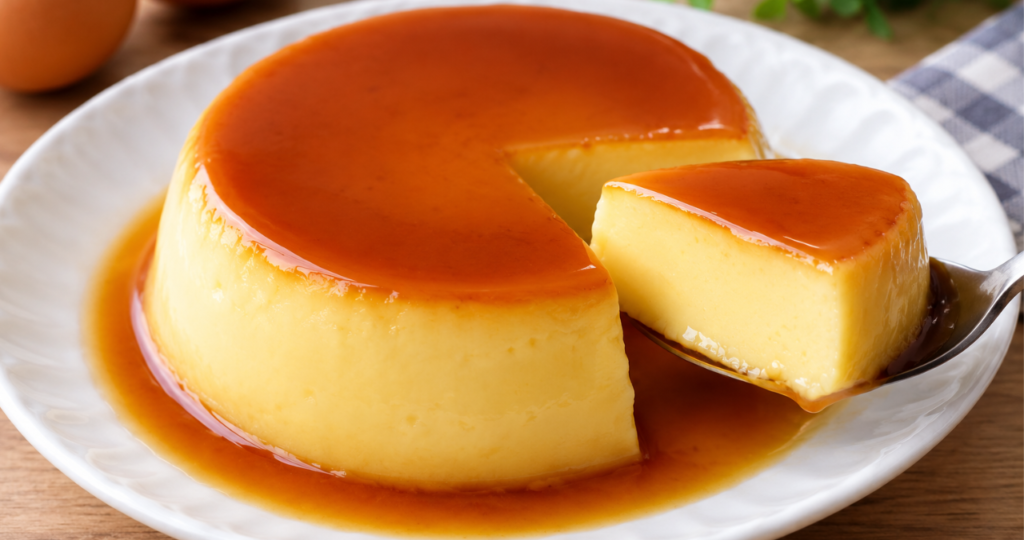
egg pudding A smooth texture is often the main goal when preparing custard desserts.
Here are some practical tips:
- Mix the eggs gently rather than whipping them.
- Don’t overheat the milk.
- Strain the custard before cooking.
- Cook at a gentle temperature.
- Use a water bath when baking.
- Avoid overcooking.
- Let the pudding cool gradually.
- Chill it properly before unmolding.
The biggest mistake is usually excessive heat. When eggs become too hot, their proteins tighten. Instead of creating a delicate custard, they can produce a firm, grainy, or rubbery texture.
Slow and steady wins the race here.
Different Ways to Cook Egg Pudding
There isn’t just one way to prepare this dessert.
Baked Egg Pudding
Baking is one of the most common methods. A water bath can provide gentle heat and help the pudding cook evenly.
This method is useful when preparing several servings at once.
Steamed Egg Pudding
Steaming is another traditional approach. The filled mold is placed in a steamer and cooked using gentle steam.
Steamed versions can have a particularly soft texture when prepared correctly.
However, excessive steam or high heat may cause the pudding to develop holes or become uneven.
Stovetop Cooking
Some pudding recipes are prepared directly on the stovetop. This method requires careful temperature control and regular attention.
It can be convenient when you don’t want to use an oven.
Common Egg Pudding Mistakes
Even a simple recipe can go wrong. Luckily, most problems have easy solutions.
Overcooking
Overcooking is one of the most common mistakes. A pudding that stays on the heat too long may become firm and rubbery.
Solution: Cook until the center is just set. It may still have a slight gentle movement when removed from the heat.
Using Excessive Heat
High heat cooks the eggs too quickly.
Solution: Use low or moderate heat and allow the pudding to cook slowly.
Whipping Too Much Air Into the Mixture
Lots of bubbles can create holes in the pudding.
Solution: Stir gently and strain the mixture before cooking.
Skipping the Straining Step
Small bits of egg can remain in the mixture.
Solution: Use a fine strainer for a smoother texture.
Burning the Caramel
Caramel can burn quickly.
Solution: Watch it closely and remove it from the heat once it reaches a rich golden-brown color.
Unmolding Too Quickly
A warm pudding may not hold its shape well.
Solution: Allow it to cool and chill before turning it onto a serving plate.
How to Tell When Egg Pudding Is Done
Knowing when the pudding is ready takes a little practice.
The outside should look set, while the center may have a gentle wobble. It shouldn’t look like liquid.
A knife or thin skewer inserted near the center can also provide clues, depending on the recipe.
Remember that the pudding continues to firm up as it cools. So, don’t wait until it becomes completely firm inside the oven or steamer.
That’s a classic case of less being more.
Flavor Variations to Try
The basic recipe is delicious, but experimenting can make it even more interesting.
Vanilla Egg Pudding
Vanilla is a simple and reliable choice. It gives the dessert a warm, familiar flavor.
Caramel Egg Pudding
Caramel adds a deep sweetness and attractive golden color. It is one of the most popular ways to serve this dessert.
Coconut Egg Pudding
Coconut milk or finely grated coconut can give the pudding a tropical touch.
Chocolate Egg Pudding
A small amount of cocoa or melted chocolate can turn the traditional dessert into a richer treat.
Coffee Egg Pudding
Coffee lovers can add a small amount of strong coffee or espresso to create a more grown-up flavor.
Cinnamon Egg Pudding
A little cinnamon adds warmth and makes the dessert especially inviting during cooler weather.
Fruit-Topped Egg Pudding
Fresh berries, sliced bananas, mango, peaches, or other fruit can add color and freshness.
The possibilities are almost endless.
How to Serve Egg Pudding
Presentation can make a simple dessert feel extra special.
Egg pudding can be served in many ways:
- On a plain white dessert plate.
- In individual glass cups.
- With caramel sauce.
- With fresh fruit.
- With whipped cream.
- With chopped nuts.
- With a light dusting of cinnamon.
- With chocolate shavings.
- With coconut flakes.
For a family dinner, one large pudding can be placed in the center of the table. For parties, individual portions can look neat and elegant.
If you’re serving it cold, take it out of the refrigerator shortly before serving. This allows the flavor to become slightly more noticeable without making the pudding too warm.
Egg Pudding for Family Gatherings
This dessert can be an excellent choice for family meals because it can be prepared in advance.
Preparing it ahead of time can reduce stress when guests arrive. Instead of trying to make dessert while everyone is waiting, you can simply take the chilled pudding from the refrigerator and serve it.
For larger gatherings, consider making several small puddings rather than one very large pudding. Individual servings are easier to portion and can be decorated differently.
You can also prepare a toppings station with:
- Fresh fruit
- Caramel sauce
- Nuts
- Coconut
- Chocolate pieces
- Cinnamon
- Whipped cream
That way, guests can customize their desserts.
Is Egg Pudding a Nutritious Dessert?
Egg pudding contains useful nutrients because its main ingredients include eggs and milk. Eggs provide protein and several important nutrients, while milk contributes protein and minerals such as calcium.
However, pudding is still a dessert, especially when made with a generous amount of sugar and caramel. It should therefore be enjoyed as part of a balanced diet rather than treated as a complete meal.
For a lighter version, cooks can experiment with:
- Reducing the amount of added sugar.
- Using smaller serving sizes.
- Adding fresh fruit.
- Choosing suitable lower-fat milk.
- Limiting rich toppings.
The exact nutritional value depends on the ingredients and quantities used.
How to Store Egg Pudding
Proper storage is important because egg pudding contains eggs and milk.
After cooking, allow the pudding to cool appropriately and refrigerate it in a covered container.
Keep the refrigerator cold and avoid leaving the pudding at room temperature for long periods.
For the best quality, enjoy the dessert while it is fresh and follow safe food-handling practices.
If the pudding develops an unusual smell, appearance, or texture, it is better to discard it rather than take a chance.
Egg Pudding vs. Other Custard Desserts
Egg pudding belongs to the broad family of custard-style desserts. It shares similarities with flan, crème caramel, baked custard, and other egg-based sweets.
The exact name and preparation method can differ from one country or household to another.
| Dessert | Main Feature | Typical Texture |
|---|---|---|
| Egg pudding | Egg and milk custard | Soft and creamy |
| Flan | Often includes caramel | Silky and firm |
| Baked custard | Usually baked gently | Creamy and delicate |
| Crème caramel | Caramel sauce is central | Smooth and rich |
| Bread pudding | Uses bread as a main ingredient | Soft and hearty |
Although these desserts may look similar, their ingredients, cooking methods, and cultural traditions can be different.
Tips for Beginners
If you’re making this dessert for the first time, don’t worry. A few simple habits can help.
Start with a small batch. This lets you learn how the mixture behaves without wasting many ingredients.
Use fresh ingredients and measure carefully.
Don’t rush the cooking process. Gentle heat is your friend.
Keep your first version simple. Vanilla or caramel is a great starting point.
Once you’re comfortable with the basic method, try other flavors.
Most importantly, don’t become discouraged if the first attempt isn’t perfect. Cooking is a learning process. Every batch teaches you something new.
How to Make Egg Pudding More Attractive
A delicious dessert should also look inviting.
You don’t need professional decorating skills. A few small touches can make a big difference.
Try serving pudding with:
- A thin caramel drizzle.
- Fresh mint leaves.
- A few berries.
- Sliced mango.
- Toasted coconut.
- Chopped pistachios.
- A small spoonful of whipped cream.
- Light chocolate shavings.
Use toppings that match the flavor. For example, coconut works well with tropical flavors, while chocolate pairs nicely with coffee or vanilla.
Keep the presentation simple. Sometimes less really is more.
Cultural Appeal of Egg Pudding
Egg-based custards have appeared in many food traditions throughout history. Different cultures have developed their own methods for combining eggs, milk, sugar, and flavorings.
Some versions are strongly associated with caramel. Others focus on vanilla, coconut, spices, or local ingredients.
This variety shows how adaptable simple foods can be. A basic combination of eggs and milk can become a dessert with a completely different personality depending on the region and cooking tradition.
That’s part of the charm of homemade food. A recipe can travel across generations and borders while still feeling familiar.
Frequently Asked Questions About Egg Pudding
Can egg pudding be made without vanilla?
Yes. Vanilla adds flavor, but it isn’t essential. You can leave it out or replace it with another suitable flavoring.
Why does my pudding have holes?
Holes often develop when the pudding is cooked at too high a temperature or when too much air is mixed into the eggs.
Why is my pudding rubbery?
Rubbery texture usually means the eggs have been overcooked or exposed to excessive heat.
Can I make pudding ahead of time?
Yes. In fact, many people prefer to prepare it ahead of time because chilling allows the pudding to set properly.
Can I add fruit?
Yes. Fresh fruit can be served alongside the pudding or used as a topping.
Is caramel necessary?
No. Caramel is popular, but a plain vanilla pudding can be delicious on its own.
Can children help make egg pudding?
Children can help with simple tasks such as measuring ingredients or stirring under adult supervision. However, adults should handle hot pans, ovens, steam, and caramel because these can cause burns.
A Simple Egg Pudding Preparation Checklist
Before starting, check that you have:
- Fresh eggs
- Milk
- Sugar
- Vanilla, if desired
- A clean mixing bowl
- A whisk or spoon
- A fine strainer
- A suitable pudding mold
- A steamer or oven
- A larger dish if using a water bath
- A refrigerator for chilling
Having everything ready before cooking makes the process smoother.
In professional kitchens, this preparation habit is often called mise en place, which simply means getting ingredients and equipment ready before you begin.
Why Homemade Egg Pudding Is Worth Trying
There is something special about making dessert from scratch.
Homemade pudding allows you to control the sweetness, texture, flavor, and serving size. You can also adjust the recipe according to your family’s preferences.
Beyond the practical benefits, cooking can create memories. A simple pudding prepared for a family dinner may become a recipe that children remember years later.
It’s not just about food. Sometimes, the simplest dishes carry the warmest memories.
Final Thoughts on Egg Pudding
egg pudding is a timeless dessert that combines simple ingredients with careful cooking to create something wonderfully comforting. Its creamy texture, gentle sweetness, and flexible flavor options make it suitable for beginners and experienced home cooks alike.
The key to success is patience. Mix the ingredients gently, avoid excessive heat, strain the custard when possible, and don’t overcook it. A water bath can provide gentle heat when baking, while proper cooling and chilling help the pudding reach the right texture.
Once you’ve mastered the basic version, there is plenty of room for creativity. You can add caramel, vanilla, coconut, chocolate, coffee, cinnamon, or fresh fruit. You can serve it in a large dish for the family or create individual portions for a special occasion.
Most importantly, don’t be afraid to experiment. Cooking is part science, part tradition, and part creativity. With a little practice, your egg pudding can become a reliable homemade dessert that brings a smile to the table.