
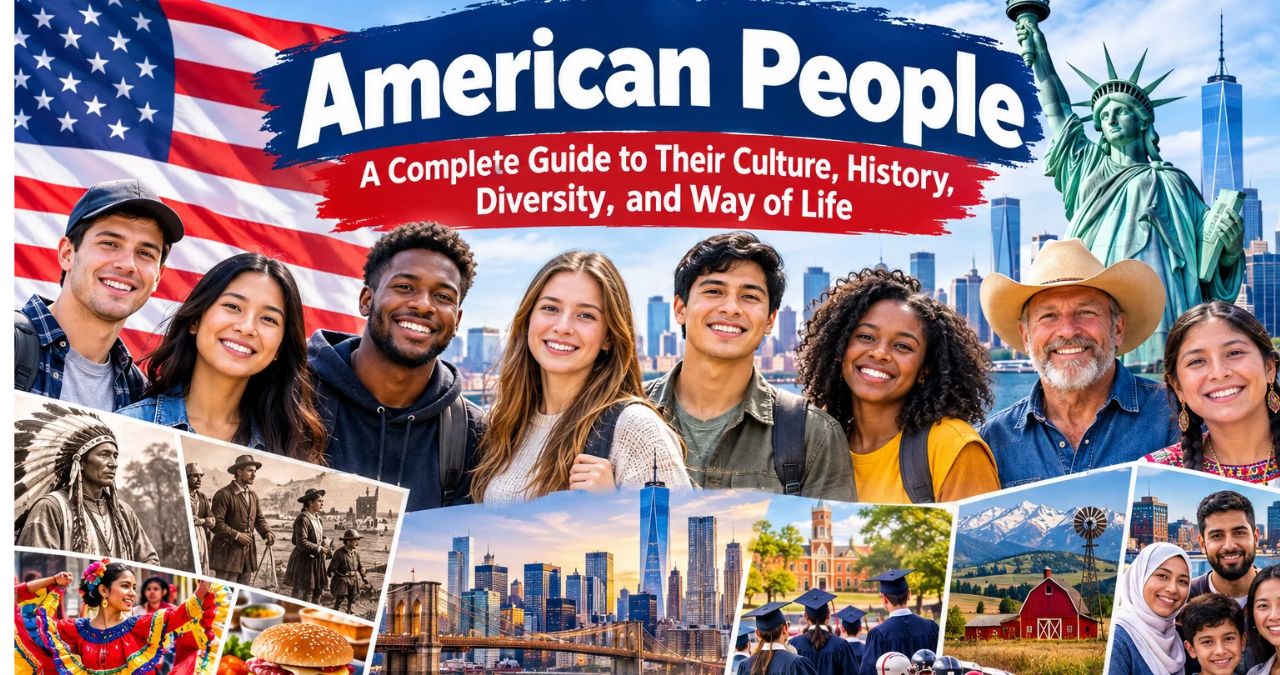
American people are often described as diverse, energetic, independent, and shaped by many different cultures. The United States is a large country made up of people with different backgrounds, languages, traditions, religions, family histories, and personal experiences. Because of this diversity, there isn’t one single way to describe what it means to be American.
The story of American people is closely connected with the history of the United States. Indigenous peoples lived across North America for thousands of years before European colonization. Later, immigrants arrived from Europe, Africa, Asia, Latin America, and many other parts of the world. Over time, these communities influenced one another and helped create the country’s modern society.
Today, American people live in cities, suburbs, small towns, farming communities, mountain regions, coastal areas, deserts, and islands. Their lifestyles can look very different depending on where they live. Someone in New York City may have a very different daily routine from someone living in rural Montana, yet both can share a sense of national identity.
Understanding American people means looking beyond stereotypes. It means exploring history, culture, family life, education, work, food, entertainment, traditions, and the many communities that make up the United States.
The Historical Roots of American People
The history of American people is long and complex. Before the United States became an independent country, North America was home to numerous Indigenous nations and communities. These peoples developed their own languages, governments, economies, belief systems, arts, and traditions.
European settlement began on a large scale during the colonial period. English, Spanish, French, Dutch, and other European influences became part of the history of North America. The colonies that later became the United States developed different economies and social systems.
Another major part of American history is the forced migration of Africans through the transatlantic slave trade. Enslaved Africans and their descendants made enormous contributions to American agriculture, music, food, language, art, business, and national culture despite the terrible conditions they experienced.
The American Revolution led to independence from Great Britain, and the United States adopted the Declaration of Independence in 1776. The country’s political system continued to develop through the Constitution, amendments, elections, courts, and changing laws.
The nineteenth and twentieth centuries brought major changes, including westward expansion, industrialization, immigration, the Civil War, the abolition of slavery, women’s suffrage, the civil rights movement, and the growth of modern cities.
All these events helped shape the experiences and identities of American people.
Diversity Among American People
One of the most important characteristics of American society is its diversity. People in the United States have family roots in almost every region of the world.
American communities include people with:
- Indigenous American heritage
- European ancestry
- African ancestry
- Asian ancestry
- Latin American and Caribbean heritage
- Middle Eastern and North African backgrounds
- Pacific Islander heritage
- Mixed or multiracial backgrounds
Many Americans have ancestors from several different countries. For example, a person may have Irish, Mexican, Filipino, and African American family connections. Another person may have recently moved to the United States and maintain strong connections with their country of birth.
This mixture of backgrounds has created a society where traditions often overlap. Food, music, celebrations, clothing, language, and family customs can reflect several cultures at once.
It is also important not to assume that every American shares the same opinions or lifestyle. The United States has political, religious, cultural, and social differences, and these differences are a normal part of a large democratic society.
Languages Spoken by American People
English is the most widely spoken language in the United States, but American society is multilingual.
Spanish is especially common, while many communities also speak Chinese languages, Tagalog, Vietnamese, Korean, Arabic, French, German, Russian, Haitian Creole, Portuguese, and many Indigenous languages.
Some American families use one language at home and another in school or at work. Others grow up speaking two or more languages from childhood.
Language can also change from one region to another. American English has many accents and vocabulary differences. The way people speak in Texas may sound different from speech in Boston, California, Minnesota, or Louisiana.
Regional expressions are another interesting part of American communication. People may use phrases that are familiar in one state but less common somewhere else.
Family Life and Communities
Family life among American people varies widely. Some households include parents and children, while others include grandparents, relatives, single parents, couples without children, or people living independently.
Modern American families may include:
- Large extended families
- Small households
- Multigenerational homes
- Adoptive families
- Blended families
- Single-parent households
- Married couples
- Unmarried partners
- People living alone
Family traditions often include shared meals, holidays, birthdays, vacations, sports, and community events.
For many people, friends and local communities are also an important part of life. Neighborhood groups, religious organizations, schools, clubs, sports teams, charities, and volunteer organizations help people build relationships.
Community life can be especially important during difficult times. When natural disasters, economic problems, or other challenges occur, Americans often organize fundraisers, volunteer groups, food drives, and community support programs.
Education in American Society
Education plays a major role in the lives of American people. Children generally attend elementary and secondary schools, while many students continue to colleges, universities, trade schools, or professional programs.
The American education system includes:
| Education Level | Common Age Range | Main Purpose |
|---|---|---|
| Elementary School | About 5–11 | Basic academic and social learning |
| Middle School | About 11–14 | Preparation for secondary education |
| High School | About 14–18 | Academic and career preparation |
| Community College | Usually 18+ | Career training or academic study |
| University | Usually 18+ | Undergraduate and advanced education |
| Trade School | Varies | Practical career and technical skills |
Education experiences can differ greatly depending on location, family circumstances, school resources, and individual interests.
American students may study subjects such as mathematics, science, history, literature, technology, art, music, health, and physical education. Many schools also offer sports and extracurricular activities.
Higher education is an important part of American society, but it isn’t the only path to success. Skilled trades, technical careers, entrepreneurship, public service, and many other occupations can provide meaningful opportunities.
Work and Careers Among American People
Work is another major part of everyday American life. The United States has a large and diverse economy that includes technology, healthcare, manufacturing, agriculture, finance, transportation, education, entertainment, construction, retail, hospitality, and many other industries.
Some Americans work in offices, while others work outdoors, in factories, hospitals, schools, restaurants, laboratories, stores, farms, or from home.
Technology has changed the workplace significantly. Remote work, online meetings, digital payments, artificial intelligence, e-commerce, and online education have created new ways of working.
Entrepreneurship is also an important part of American culture. Small businesses are found in communities across the country, including family-owned restaurants, repair shops, farms, online businesses, professional services, and retail stores.
At the same time, American workers face challenges such as living costs, job competition, workplace stress, changing technology, and the need to develop new skills.
Food and Eating Habits
Food is one of the easiest ways to see the cultural diversity of American people.
American cuisine includes traditional foods as well as dishes influenced by immigrants and Indigenous communities. Regional foods are particularly important.
Examples include:
- Barbecue in several regional styles
- New England clam chowder
- Southern fried chicken
- Tex-Mex cuisine
- New York-style pizza
- California-inspired dishes
- Louisiana Creole and Cajun food
- Chicago-style foods
- Native American traditional foods
- Mexican American cuisine
- Chinese American dishes
Fast food is also strongly associated with the United States, but American eating habits are much broader than burgers and fries. Many people enjoy fresh vegetables, seafood, international cuisines, vegetarian meals, home cooking, and health-focused diets.
Farmers’ markets, food trucks, local restaurants, coffee shops, bakeries, and international grocery stores are common in many communities.
Food also plays an important role during holidays and family gatherings. Thanksgiving meals, for example, can bring relatives and friends together around a shared table.
Holidays and Traditions
American people celebrate many national, cultural, religious, and family holidays.
Major national holidays include Independence Day, Thanksgiving, Memorial Day, Labor Day, and Veterans Day. Other widely observed celebrations include Christmas, New Year’s Day, Halloween, Easter, and Valentine’s Day.
Different communities may also celebrate Lunar New Year, Diwali, Eid, Hanukkah, Kwanzaa, Día de los Muertos, and many other cultural or religious occasions.
Holiday traditions can include:
- Family meals
- Gift giving
- Parades
- Fireworks
- Religious services
- Community festivals
- Decorations
- Music and dancing
- Visiting relatives
- Volunteer work
These traditions aren’t identical for everyone. Some families create their own customs, combining traditions from different cultures.
American People and Popular Culture
American popular culture has had a major influence around the world. Movies, television, music, sports, fashion, books, and digital media created in the United States are widely consumed internationally.
Hollywood is one of the world’s best-known centers of film and television production. American music has also influenced global culture through genres such as jazz, blues, rock, country, hip-hop, pop, gospel, and rhythm and blues.
Sports are another important part of American culture. Popular professional sports include:
- American football
- Basketball
- Baseball
- Ice hockey
- Soccer
- Tennis
- Golf
College sports also attract large audiences, particularly American football and basketball.
The rise of social media has changed how Americans create and consume culture. Today, ordinary individuals can become creators, entrepreneurs, commentators, musicians, or online educators with audiences around the world.
Regional Differences Across the United States
The United States is geographically huge, so regional differences are significant.
The Northeast contains historic cities, universities, financial centers, and densely populated metropolitan areas. The South has distinctive traditions in food, music, architecture, and hospitality. The Midwest is often associated with agriculture, manufacturing, large freshwater resources, and major cities. The West includes deserts, mountains, forests, Pacific coastlines, technology centers, and diverse metropolitan areas.
Alaska and Hawaii also have unique geographical and cultural characteristics.
Climate affects daily life as well. People living in northern states may prepare for snow and freezing temperatures, while residents of desert regions may deal with extreme heat.
Because of these differences, there is no single “American lifestyle.” There are many American lifestyles.
Cities, Suburbs, and Rural America
American people live in very different types of communities.
Large cities such as New York, Los Angeles, Chicago, Houston, and Philadelphia have dense populations and extensive public and private transportation systems. They often provide a wide variety of restaurants, cultural attractions, universities, businesses, and entertainment.
Suburban areas generally have lower population density than city centers. Many suburbs contain houses, schools, shopping areas, parks, and local businesses.
Rural communities may have farms, ranches, forests, small towns, and wide open spaces. Agriculture and natural-resource industries can be particularly important in these regions.
Each setting has advantages and challenges. Cities may offer more jobs and cultural opportunities but can also have high housing costs and traffic. Rural areas may offer more space and quieter surroundings but can have fewer nearby services.
Values and Ideas Often Associated With American People
It is risky to describe an entire population with a short list of values. Still, certain ideas have played an important role in American history and public life.
These include:
- Individual freedom
- Personal responsibility
- Equality under the law
- Entrepreneurship
- Innovation
- Community service
- Freedom of expression
- Democratic participation
- Opportunity
Not every American agrees about what these values mean or how they should be applied. Political and social debates are a normal part of American public life.
The country’s founding documents emphasize ideas such as liberty and equality, while American history also shows that these ideals have not always been experienced equally by everyone. Social movements have repeatedly pushed the country toward broader rights and greater inclusion.
Religion and Belief
The United States has a wide range of religious and nonreligious communities. Christianity is historically the largest religious tradition, but American society also includes Jewish, Muslim, Hindu, Buddhist, Sikh, and other religious communities.
There are also many Americans who identify as atheist, agnostic, spiritual but not religious, or unaffiliated.
Religious freedom is protected by the U.S. Constitution. People can practice their faith, change their beliefs, or choose not to follow a religion.
This diversity contributes to the country’s many religious buildings, cultural celebrations, charities, schools, and community organizations.
Immigration and American Identity
Immigration has played a major role in the development of American society. People have arrived in the United States for many reasons, including employment, education, family reunification, safety, and the hope of building a better future.
Immigrant communities have contributed to American life in countless ways. They have opened businesses, created art and music, developed scientific research, worked in agriculture and healthcare, and introduced new foods and traditions.
At the same time, immigration has sometimes been the subject of intense political debate. Questions about borders, citizenship, legal status, integration, and refugee policy can create disagreement.
A balanced understanding recognizes both the contributions of immigrants and the complexity of immigration policy.
Challenges Facing American People
Life in the United States offers many opportunities, but it also comes with challenges.
Some important issues include:
- Housing affordability
- Healthcare costs
- Education expenses
- Income inequality
- Job insecurity
- Political polarization
- Access to transportation
- Environmental concerns
- Mental and emotional well-being
- The effects of rapid technological change
These issues don’t affect every community in the same way.
For example, housing costs can be especially high in some major metropolitan areas, while rural communities may face different problems such as limited healthcare access or fewer employment opportunities.
American communities continue to debate possible solutions through elections, legislation, local programs, charities, businesses, schools, and civic organizations.
American People and Technology
Technology has become deeply connected to modern American life. Smartphones, computers, online banking, streaming entertainment, social networks, digital shopping, and artificial intelligence influence how people work and communicate.
The United States has been a major center of technological innovation. American companies and research institutions have contributed to developments in computing, aerospace, medicine, communications, and many other fields.
Technology can make life easier, but it also creates questions about privacy, misinformation, employment, cybersecurity, and responsible use of artificial intelligence.
For American people, the challenge is not simply creating new technology but learning how to use it wisely.
Community Service and Civic Participation
Civic participation is another important part of American society. People can participate in public life in many ways, from voting in elections to attending local meetings or volunteering for community projects.
Volunteers support:
- Food banks
- Animal shelters
- Schools
- Hospitals
- Environmental projects
- Disaster relief programs
- Community centers
- Youth sports
- Charitable organizations
Voting is also an important civic activity. Local, state, and federal elections allow citizens to choose representatives and influence public policy.
Young people can participate in civic life through education, volunteering, community groups, peaceful activism, and other forms of engagement.
Common Misconceptions About American People
Because American culture is highly visible around the world, people sometimes develop simplified ideas about Americans.
For example, it isn’t accurate to assume that all Americans are wealthy, all Americans love the same sports, or everyone follows the same political or religious beliefs.
It is also incorrect to think that American culture is entirely separate from other cultures. In reality, American society has developed through centuries of interaction among Indigenous peoples, immigrants, enslaved people and their descendants, neighboring countries, and international communities.
The best way to understand American people is to recognize their differences rather than forcing everyone into one stereotype.
What Makes American Society Unique?
The United States combines enormous geographic size with cultural diversity and a long history of immigration. This creates a society where different traditions can exist side by side.
A person may enjoy traditional American baseball, eat Korean food for dinner, celebrate Mexican American cultural traditions, listen to Nigerian music, and work for an international company—all within the same week.
That mixture is one of the most interesting features of American life.
American identity can therefore be both personal and shared. People may identify strongly with their family heritage, state, city, neighborhood, religion, profession, or cultural community while also identifying as American.
Looking Toward the Future
The future of American people will be shaped by changing technology, demographics, education, environmental conditions, economic developments, and cultural exchange.
Younger generations are growing up in an increasingly connected world. Social media and digital communication allow Americans to interact with people across national borders almost instantly.
At the same time, traditional community connections remain important. Families, schools, neighborhoods, workplaces, sports clubs, religious organizations, and volunteer groups continue to bring people together.
The future may bring challenges, but it also creates opportunities for innovation and cooperation. History shows that American society has changed many times, sometimes quickly and sometimes slowly.
Final Thoughts on American People
American people cannot be understood through one stereotype, one tradition, or one lifestyle. They represent a remarkably broad collection of communities, histories, cultures, languages, beliefs, occupations, and personal stories.
From Indigenous traditions and immigrant communities to modern technology and popular culture, many influences have shaped the United States. Some Americans live in huge cities, while others live in small towns or rural areas. Some families have lived in the country for generations, while others are newcomers building their first chapter in America.
Understanding american people requires curiosity, historical awareness, and respect for differences. The United States has faced serious challenges throughout its history, but its diverse population continues to contribute to science, business, art, education, sports, public service, and everyday community life. In the end, the story of american people is a story of diversity, change, opportunity, and the continuing effort to build a better future together.