
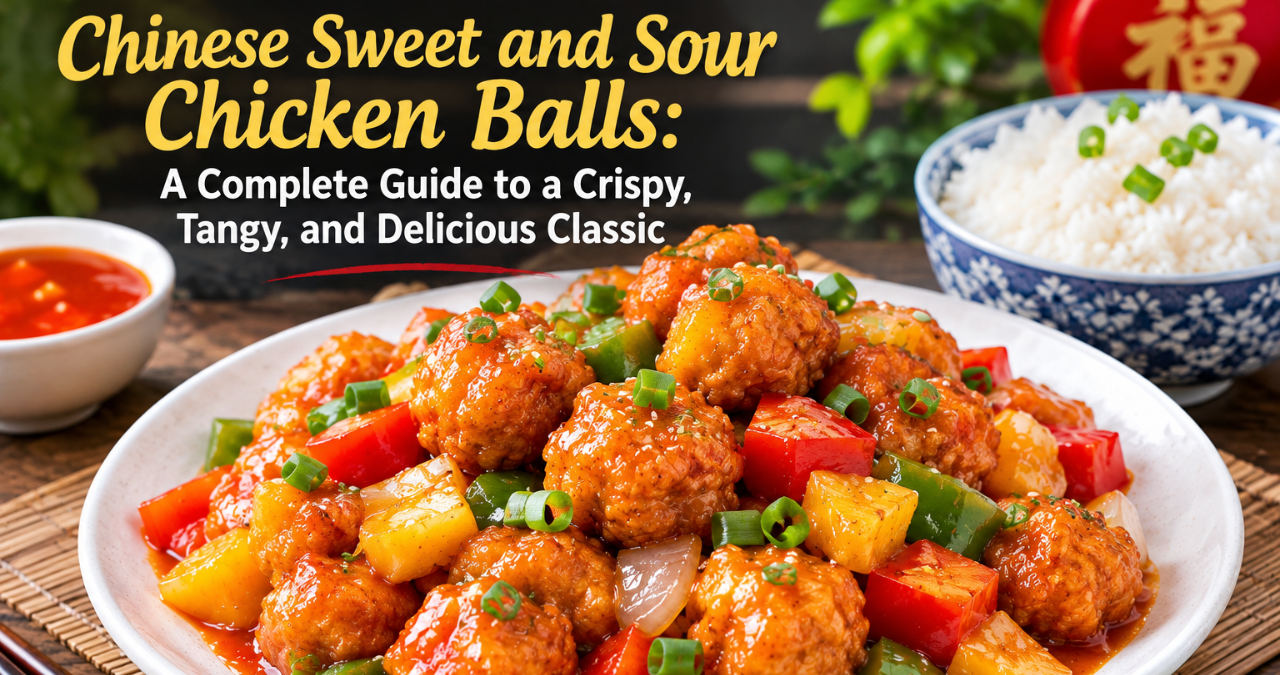
Introduction to chinese sweet and sour chicken balls
Chinese sweet and sour chicken balls are a popular takeaway-style dish loved for their crispy coating, tender chicken, colorful vegetables, and bright sweet-and-sour sauce. The dish combines several textures and flavors in one plate: crunchy on the outside, juicy in the center, and pleasantly tangy with every bite.
Although many people associate this meal with Chinese cuisine, the familiar battered chicken balls served with a bright sweet-and-sour sauce are especially common in Chinese-Canadian and Western Chinese takeaway restaurants. Traditional Chinese cooking has many sweet-and-sour dishes, but the deep-fried chicken-ball version has developed its own identity outside China.
The good news? You don’t need to be a professional chef to make a tasty version at home. With simple ingredients, careful preparation, and the right cooking temperature, you can create crisp chicken pieces and a balanced sauce that tastes fresh rather than overly sweet.
This guide explores the ingredients, preparation methods, cooking techniques, sauce variations, serving ideas, nutrition considerations, storage advice, and common mistakes associated with chinese sweet and sour chicken balls.
What Are Chinese Sweet and Sour Chicken Balls?
At their simplest, chinese sweet and sour chicken balls consist of small pieces of chicken covered in a light batter and cooked until golden and crisp. They’re then served with a sweet-and-sour sauce, either poured over the chicken or offered separately for dipping.
A typical serving may include:
- Boneless chicken breast or thigh
- Flour or a flour-and-cornstarch mixture
- Egg
- Water or another liquid for the batter
- Cooking oil
- Pineapple pieces
- Bell peppers
- Onion
- Sweet-and-sour sauce
- Rice or noodles on the side
The appeal comes from contrast. The chicken is crisp, while the sauce is smooth and glossy. Pineapple adds sweetness, peppers bring freshness, and vinegar provides the sharp note that keeps the dish from becoming too heavy.
The History Behind Sweet-and-Sour Chicken
Sweet-and-sour flavors have a long history in Chinese cooking. Different regions of China have developed their own approaches to combining sweet, sour, salty, and savory ingredients.
However, the familiar battered chicken balls served with a thick red or orange sauce aren’t simply a direct representation of one traditional Chinese recipe. They became particularly popular through Chinese restaurants serving Western audiences, especially in Britain, Canada, and other countries.
This distinction is useful because it helps explain why restaurant-style versions can look and taste quite different from regional Chinese sweet-and-sour dishes.
Traditional Chinese sweet-and-sour preparations may use ingredients such as:
- Vinegar
- Sugar
- Soy sauce
- Rice wine
- Fruits
- Tomato-based ingredients
- Aromatic spices
Meanwhile, Western takeaway versions often use a thicker batter and a sweeter, brightly colored sauce.
Why Chinese Sweet and Sour Chicken Balls Are So Popular
There’s something undeniably appealing about this combination.
First, fried chicken provides a familiar comfort-food texture. Then comes the sauce, which wakes up the palate with sweetness and acidity. Add pineapple and crunchy vegetables, and you’ve got a meal that’s both satisfying and lively.
Some of the main reasons people enjoy this dish include:
Crispy Texture
The batter creates a crunchy outer layer that contrasts beautifully with the tender chicken inside.
Balanced Flavor
Sweetness and acidity work together to create a lively taste. A good sauce shouldn’t taste like pure sugar.
Family-Friendly Appeal
The mild flavor makes the dish approachable for many people, including those who don’t enjoy very spicy foods.
Flexible Ingredients
You can easily adjust the vegetables, sauce, chicken cuts, and level of sweetness.
Restaurant-Style Experience
When prepared carefully, homemade chicken balls can provide that familiar takeaway feeling without requiring complicated equipment.
Essential Ingredients for Chinese Sweet and Sour Chicken Balls
The ingredient list is fairly straightforward. What matters most is using sensible proportions.
| Ingredient | Main Purpose |
|---|---|
| Chicken breast or thigh | Main protein |
| Plain flour | Structure for the batter |
| Cornstarch | Helps create crispness |
| Egg | Helps bind the batter |
| Water | Adjusts batter consistency |
| Cooking oil | Frying |
| Bell pepper | Crunch and color |
| Onion | Savory flavor |
| Pineapple | Sweet, fruity flavor |
| Vinegar | Sour element |
| Sugar | Sweetness |
| Ketchup or tomato-based ingredient | Color and body |
| Soy sauce | Savory depth |
| Cornstarch slurry | Thickens the sauce |
Choosing the Chicken
Chicken breast is popular because it’s lean and easy to cut into small pieces. However, chicken thighs can be even more forgiving because they contain more fat and tend to remain juicy.
Whichever cut you choose, remove unwanted skin, bones, and excess connective tissue before cutting.
Cut the chicken into pieces of similar size. This simple step is often overlooked, but it helps the pieces cook evenly.
How to Prepare the Chicken
Before making the batter, prepare the chicken properly.
Pat the chicken dry with paper towels. Excess moisture can make the batter slide off and can also cause dangerous oil splattering during frying.
Cut the chicken into bite-sized pieces, aiming for relatively equal sizes.
You can season the chicken lightly with:
- A small amount of salt
- White pepper
- Garlic powder
- A little soy sauce
- Ground ginger
Don’t over-season it. The sauce will provide plenty of flavor later.
For an extra flavorful result, allow the seasoned chicken to rest for a short time before coating.
Creating the Perfect Crispy Batter
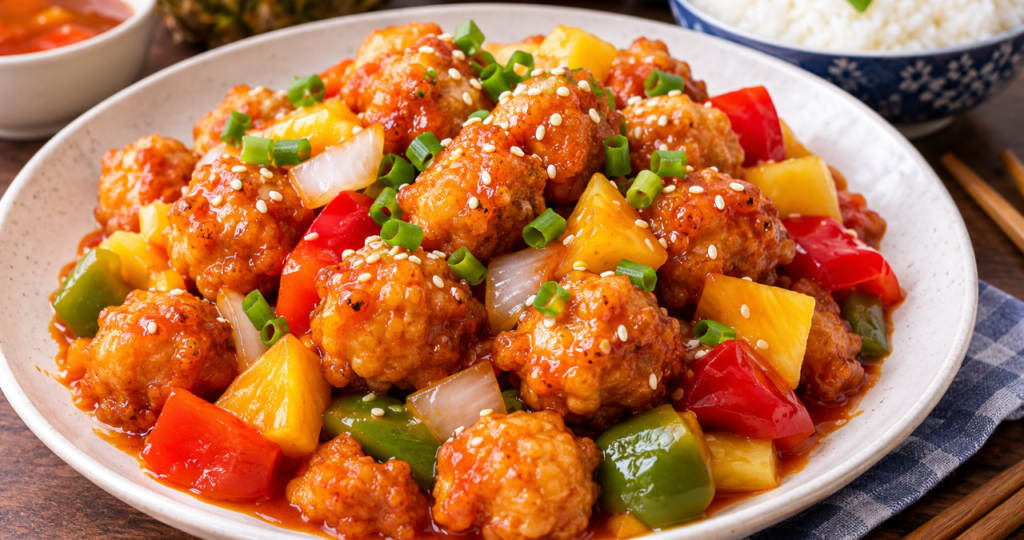
Chinese sweet and sour chicken balls The batter is one of the most important parts of chinese sweet and sour chicken balls.
A simple batter can be made with flour, cornstarch, egg, and water. Cornstarch is particularly useful because it can contribute to a lighter and crispier coating.
The batter should be thick enough to cling to the chicken but not so thick that it forms a heavy dough-like shell.
A useful texture is similar to thick pancake batter.
Tips for Better Batter
- Keep the batter reasonably cold before frying.
- Don’t add excessive water.
- Mix until combined rather than aggressively beating it for a long time.
- Coat chicken pieces evenly.
- Avoid letting coated pieces sit in a large pile before frying.
A common mistake is making the batter too thin. If it runs immediately off the chicken, the finished coating may be patchy and weak.
On the other hand, a batter that’s excessively thick can produce a dense crust.
The Secret to Golden and Crispy Chicken
Oil temperature plays a huge role.
If the oil isn’t hot enough, the chicken can absorb too much oil and become greasy. If it’s excessively hot, the outside may brown before the chicken has cooked safely inside.
For deep-frying, many cooks aim for an oil temperature around 175–180°C (350–355°F), depending on the recipe and equipment.
A kitchen thermometer is the easiest way to monitor this.
Frying Tips
- Don’t overcrowd the pan.
- Fry in batches.
- Allow the oil to return to temperature between batches.
- Use appropriate equipment for deep frying.
- Keep water away from hot oil.
- Never leave hot oil unattended.
Cook chicken until the center reaches a safe internal temperature of 74°C (165°F).
Once cooked, place the chicken on a suitable rack or paper-lined surface to drain excess oil.
Making a Classic Sweet-and-Sour Sauce
The sauce is where the personality of the dish really comes alive.
A basic homemade sauce can combine:
- Vinegar
- Sugar
- Tomato ketchup or another tomato-based ingredient
- Soy sauce
- Pineapple juice
- Water
- Cornstarch
The goal isn’t simply to make the sauce sweet. It should have several layers.
Sweetness
Sugar, pineapple juice, or both can provide sweetness.
Sourness
Rice vinegar or another mild vinegar can supply acidity.
Savory Flavor
Soy sauce adds saltiness and depth.
Thickness
Cornstarch mixed with cold water can thicken the sauce into a glossy consistency.
A Simple Balancing Rule
If the sauce tastes too sweet, increase acidity carefully.
If it tastes too sour, add a little sweetness.
If it tastes flat, a small amount of soy sauce may help.
Don’t rush this part. Taste as you go, making small adjustments rather than adding large amounts at once.
Adding Pineapple and Vegetables
Pineapple is a classic companion to sweet-and-sour chicken.
Fresh pineapple can provide a bright flavor, while canned pineapple is convenient and consistent. If you’re using canned pineapple, the juice can often be reserved for the sauce.
Bell peppers are another common ingredient. Red, green, yellow, and orange peppers all work well.
Onions provide a savory contrast.
Other possible additions include:
- Carrot
- Cucumber
- Spring onion
- Snow peas
- Baby corn
- Broccoli
Don’t overload the dish with vegetables, though. The chicken should remain the star.
How to Combine the Chicken and Sauce
Here’s an important decision: when should you add the sauce?
If maximum crispness is your priority, serve the sauce separately or drizzle it over the chicken immediately before eating.
If you prefer softer, fully coated chicken, toss the fried pieces with the hot sauce shortly before serving.
The longer crispy chicken sits in wet sauce, the softer its coating becomes. That’s simply the nature of fried food.
For a restaurant-style presentation, arrange the chicken on a serving plate and place the sauce, vegetables, and pineapple around or over it.
Chinese Sweet and Sour Chicken Balls With Rice
Rice is one of the easiest side dishes for chinese sweet and sour chicken balls.
Steamed white rice offers a neutral base that lets the sauce stand out.
You could also use:
- Jasmine rice
- Basmati rice
- Egg fried rice
- Vegetable fried rice
- Brown rice
For a lighter meal, steamed vegetables can be served alongside the chicken.
The rice absorbs extra sauce, making every mouthful flavorful. It’s a simple pairing, but sometimes the classics get it right.
Serving Chinese Sweet and Sour Chicken Balls at Home
Presentation can make an ordinary meal feel special.
Place the crispy chicken in the center of a serving plate. Add pineapple chunks and colorful bell peppers around it. Pour a moderate amount of sauce over the top or serve it in a small bowl.
A final garnish can include:
- Chopped spring onions
- Sesame seeds
- Fresh coriander
- Thinly sliced red chili for those who like heat
Don’t go overboard with garnish. A clean presentation usually looks more appetizing.
Popular Variations to Try
One of the best things about this dish is how adaptable it is.
Spicy Sweet-and-Sour Chicken
Add fresh chili, chili flakes, or a little chili sauce.
Extra-Pineapple Version
Use more pineapple for a fruitier flavor.
Vegetable-Heavy Version
Increase the amount of peppers, onions, carrots, and other vegetables.
Air-Fried Chicken Balls
Instead of deep frying, coated chicken can be prepared in an air fryer according to the appliance’s instructions.
The texture may differ from deep frying, but this can be a convenient alternative for people who want to use less oil.
Baked Chicken Balls
Oven baking is another option. Lightly coating the chicken with oil can help improve browning.
Sweet-and-Sour Chicken With Rice Noodles
Serve the chicken and sauce over cooked rice noodles for a different texture.
Common Mistakes and How to Avoid Them
Even a simple recipe can go sideways if a few details are ignored.
Making the Batter Too Thick
Problem: The coating becomes heavy.
Solution: Add small amounts of water until the batter reaches a thick but pourable consistency.
Making the Batter Too Thin
Problem: The coating doesn’t stick well.
Solution: Add a little more flour or cornstarch.
Overcrowding the Frying Pan
Problem: Oil temperature drops and chicken becomes greasy.
Solution: Fry in smaller batches.
Making the Sauce Too Sweet
Problem: The dish tastes more like candy than dinner.
Solution: Add acidity gradually and taste again.
Overcooking the Chicken
Problem: The center becomes dry.
Solution: Use evenly sized pieces and monitor cooking carefully.
Adding Sauce Too Early
Problem: Crispy chicken quickly becomes soft.
Solution: Add sauce just before serving.
Food Safety Tips
When preparing chinese sweet and sour chicken balls, food safety should always come first.
Raw chicken can carry harmful bacteria, so keep it separate from ready-to-eat foods.
Remember these basic rules:
- Wash your hands before and after handling raw chicken.
- Use separate cutting boards for raw meat and ready-to-eat ingredients when possible.
- Don’t reuse utensils that touched raw chicken without washing them.
- Cook chicken thoroughly.
- Refrigerate leftovers promptly.
- Don’t leave cooked food at room temperature for extended periods.
- Handle hot oil carefully.
When in doubt, prioritize food safety over speed.
Nutritional Considerations
Deep-fried chicken balls can be high in calories because of the batter and cooking oil. The sauce may also contain a significant amount of added sugar.
That doesn’t mean you can’t enjoy the dish. Portion size and preparation method matter.
For a more balanced meal, consider:
- Serving a moderate portion of chicken.
- Adding plenty of vegetables.
- Using steamed rice instead of heavily fried sides.
- Reducing added sugar in the sauce.
- Baking or air-frying the chicken.
- Controlling the amount of sauce served.
A homemade version gives you much more control over the ingredients than many restaurant meals.
Storage and Reheating Advice
Leftover chicken should be cooled and refrigerated promptly in a suitable airtight container.
For best quality, store the crispy chicken separately from the sauce whenever possible.
This helps prevent the coating from becoming completely soggy.
Reheating
An oven or air fryer can help restore some crispness.
Microwaving is convenient, but it generally makes fried coatings softer.
If you’ve stored the sauce separately, warm it gently and combine it with the reheated chicken just before serving.
Always make sure leftovers are heated thoroughly before eating.
How to Make the Dish More Restaurant-Like
If you’re trying to recreate the takeaway experience, pay attention to small details.
Use Evenly Cut Chicken
Uniform pieces cook more consistently.
Keep the Coating Crisp
Don’t drown the chicken in sauce too early.
Balance the Sauce
A good sweet-and-sour sauce should have a noticeable contrast between sugar and acidity.
Add Color
Pineapple, red pepper, green pepper, and onion make the dish visually appealing.
Serve Immediately
Freshly cooked chicken has its best texture straight from the kitchen.
Frequently Asked Questions
Are Chinese sweet and sour chicken balls actually Chinese?
The sweet-and-sour flavor has deep roots in Chinese culinary traditions, but the familiar battered chicken-ball version is strongly associated with Western Chinese restaurant cooking. It’s best understood as a Chinese-inspired restaurant dish rather than a single traditional regional Chinese recipe.
Can I use chicken thighs?
Absolutely. Chicken thighs can be especially juicy and flavorful. Remove bones and skin, then cut the meat into evenly sized pieces.
Can I make the sauce less sweet?
Yes. Reduce the sugar and increase the vinegar slightly if needed. Make changes gradually because too much vinegar can make the sauce harsh.
Why did my chicken lose its crispness?
The most common reason is prolonged contact with sauce. Fried food naturally softens when exposed to moisture.
Can I freeze cooked chicken balls?
You can freeze cooked chicken, although the texture may not be as crisp after thawing and reheating. For better results, freeze the chicken separately from the sauce.
What vegetables go best with this dish?
Bell peppers and onions are classic choices. Pineapple is also commonly included, while carrots, spring onions, snow peas, and baby corn can provide additional variety.
Is homemade sweet-and-sour sauce difficult?
Not at all. Once you understand the basic balance of sweet, sour, savory, and thickening ingredients, it’s quite easy to adjust the sauce to your taste.
Expert Tips for Better Results
If you’re making this dish for the first time, don’t try to change everything at once. Start with a basic recipe and improve it over time.
Keep these practical tips in mind:
- Dry the chicken before battering.
- Cut pieces to a similar size.
- Use cornstarch to help improve crispness.
- Keep frying temperatures steady.
- Avoid overcrowding.
- Taste the sauce before combining it with the chicken.
- Add sauce shortly before serving.
- Serve with rice or vegetables for a complete meal.
- Keep raw and cooked ingredients separate.
- Use a thermometer when you’re unsure about cooking temperature.
Small improvements can make a surprisingly big difference.
Why Homemade Chinese Sweet and Sour Chicken Balls Are Worth Trying
There are plenty of reasons to prepare chinese sweet and sour chicken balls at home.
For starters, you control the ingredients. You can decide how much sugar, salt, oil, and sauce goes into the meal. You can also choose your preferred chicken cut and vegetables.
It’s also a fun dish for family meals. Kids and adults can customize their portions, and the sauce can be served separately for people who prefer extra crisp chicken.
Most importantly, homemade cooking gives you room to experiment. Maybe you prefer a sharper sauce. Perhaps you love pineapple. Or maybe you want a spicy version with fresh chili.
There’s no need to stick rigidly to one style.
A Simple Meal-Planning Idea
If you’re preparing the dish for a family dinner, organize the cooking into stages.
Before cooking:
- Cut the chicken.
- Prepare the vegetables.
- Mix the sauce ingredients.
- Prepare the batter.
- Cook the rice.
During cooking:
- Heat the oil carefully.
- Fry chicken in batches.
- Cook the vegetables.
- Heat and thicken the sauce.
At serving time:
- Reheat or finish the sauce.
- Add pineapple and vegetables.
- Place crispy chicken on the serving plate.
- Add sauce.
- Garnish lightly.
- Serve immediately.
This approach keeps the kitchen organized and reduces last-minute rushing.
The Role of Sweet, Sour, and Savory Flavors
Understanding flavor balance can make you a better cook.
Sweetness creates warmth and richness. Sourness adds brightness. Saltiness brings out other flavors. Meanwhile, savory ingredients give the sauce depth.
If one element dominates, the dish can feel unbalanced.
For example:
Too sweet: The dish becomes heavy.
Too sour: The sauce can taste sharp.
Too salty: Other flavors disappear.
Too bland: The sauce lacks character.
The trick is to make small adjustments and taste frequently.
A Modern Approach to a Classic Takeaway Favorite
Today’s home cooks have more options than ever. You can deep-fry traditionally, bake the chicken, or use an air fryer. You can use fresh pineapple or canned pineapple. You can make the sauce from scratch or modify a prepared sauce.
The important thing is to understand what each ingredient contributes.
Once you know that, changing the recipe becomes much easier.
For example, if you want more crunch, focus on the batter and cooking method. If you want more freshness, increase vegetables. If you want more tang, adjust the vinegar. If you want heat, add chili.
That’s the beauty of cooking: a recipe can be a starting point rather than a set of chains.
Final Thoughts on Chinese Sweet and Sour Chicken Balls
Chinese sweet and sour chicken balls remain a popular comfort-food choice because they bring together everything many diners enjoy: crisp chicken, bright vegetables, juicy pineapple, and a bold sauce that balances sweetness with acidity.
While the familiar takeaway-style version developed largely through Chinese restaurant traditions outside mainland China, it has become a recognizable dish in its own right. Understanding that background helps us appreciate both its cultural journey and its culinary appeal.
Whether you’re preparing dinner for your family, experimenting with homemade takeaway recipes, or simply looking for a fun weekend meal, this dish offers plenty of possibilities. Start with good-quality chicken, create a batter that isn’t too heavy, maintain proper cooking temperatures, and pay close attention to the sweet-and-sour balance.
Above all, don’t be afraid to make the recipe your own. Chinese sweet and sour chicken balls can be crisp, colorful, flavorful, and satisfying when prepared with care—and with a few simple techniques, you can bring that much-loved restaurant experience right into your own kitchen.
Would you like a matching recipe card with exact ingredient amounts and cookin