
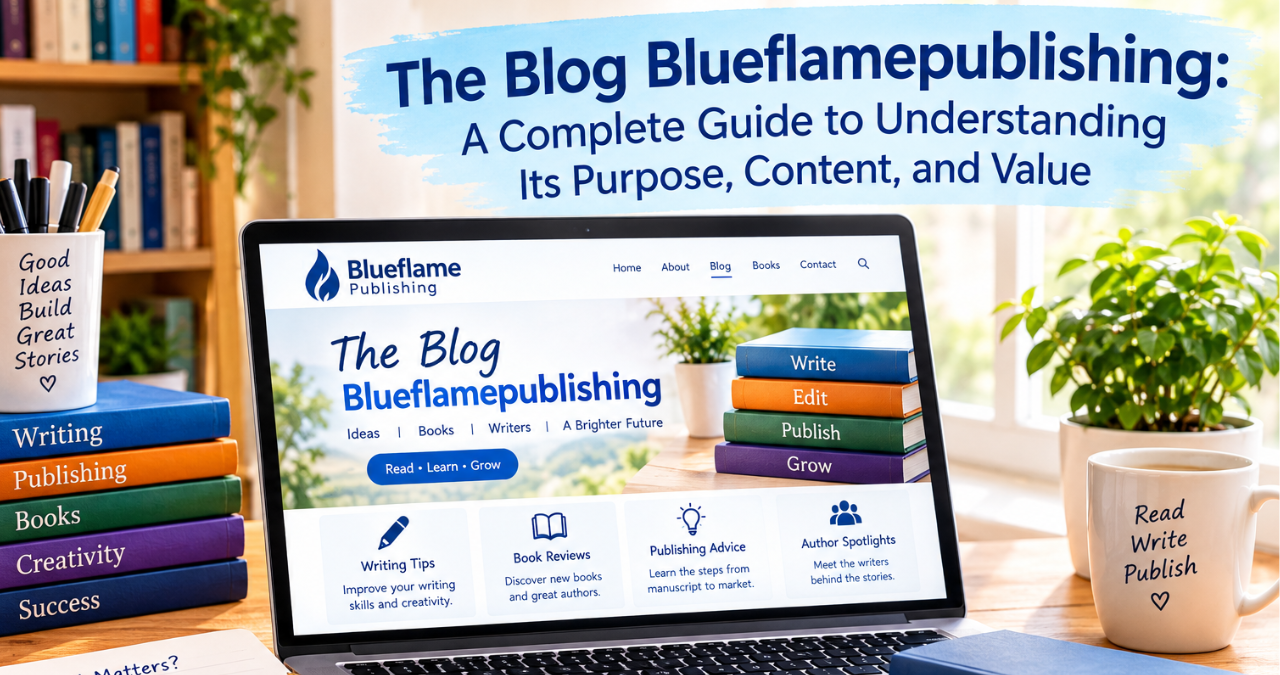
The blog blueflamepublishin is a phrase that may lead readers to a publishing-focused online space where ideas, stories, information, and creative content can be explored. In today’s digital world, blogs have become much more than simple online journals. They can act as information hubs, creative platforms, educational resources, and places where writers and readers connect.
A modern publishing blog can cover many subjects, from books and writing advice to culture, creativity, personal development, and digital publishing. That’s what makes blogs interesting: there’s often something new around the corner.
For readers searching for the blog blueflamepublishing, understanding its possible purpose, structure, content, and importance can make the experience more useful. Whether you’re a regular reader, an aspiring writer, a publisher, or simply someone interested in online content, learning how publishing blogs work can help you find valuable information more easily.
This guide explores the idea behind the blog blueflamepublishing, the types of information readers may expect, the role of publishing blogs, and the qualities that make a blog trustworthy and useful.
What Is the Blog Blueflamepublishing?
At its simplest, the blog blueflamepublishing can be understood as a blog associated with the Blueflame Publishing name or publishing-related content. A blog is an online publication where articles are posted regularly or occasionally for readers.
Unlike a traditional printed publication, a blog can be updated quickly. New articles can be published without waiting for printing, shipping, or distribution. Readers can also access content from computers, tablets, and mobile phones.
A publishing blog may serve several purposes, including:
- Sharing information with readers
- Discussing books and authors
- Providing writing advice
- Exploring publishing trends
- Presenting creative ideas
- Offering educational material
- Highlighting literary topics
- Building a community around reading and writing
The exact subjects covered by a particular blog can change over time. Therefore, readers should always look at the actual articles, author information, and official pages when they need specific facts.
Why Publishing Blogs Matter in the Digital Age
The internet has changed how people discover books, writers, and ideas. Years ago, readers often depended on newspapers, magazines, bookstores, libraries, and word of mouth. Today, a person can discover a new writer or publishing idea with only a few clicks.
Publishing blogs help fill this gap.
They can explain complicated subjects in a simple way. For example, someone who doesn’t understand how book publishing works can read an article explaining manuscripts, editing, book covers, marketing, and distribution.
Similarly, a new writer may find practical advice about:
- Developing a writing routine
- Creating interesting characters
- Editing a manuscript
- Understanding different publishing models
- Building an author platform
- Promoting a book
- Connecting with readers
That accessibility is one of the biggest strengths of online publishing content.
The Blog Blueflamepublishing and Its Potential Audience
A publishing-oriented blog can attract many different types of readers. Not everyone arrives with the same goal, and that’s perfectly fine.
Some visitors may be experienced authors, while others may be reading about publishing for the first time.
Aspiring Writers
New writers often have many questions. They may wonder how to turn an idea into a complete manuscript or how the publishing process works.
Helpful blog content can give beginners a clearer starting point and reduce confusion.
Established Authors
Experienced authors can also benefit from publishing blogs. The industry keeps changing, especially because of digital media, online marketing, audiobooks, ebooks, and social platforms.
An experienced writer may visit a publishing blog to discover fresh ideas or consider a different approach.
Book Readers
Readers don’t have to be writers to enjoy publishing content. Articles about authors, books, literary culture, and storytelling can make the reading experience richer.
Students and Researchers
Students may use publishing blogs to understand writing, literature, media, communication, and the broader publishing industry. However, important academic work should rely on reliable primary and scholarly sources rather than a blog alone.
Publishing Enthusiasts
Some people simply love books and the publishing world. They enjoy learning how books are created and how ideas move from an author’s imagination to a finished publication.
Common Topics Found on Publishing Blogs
One reason publishing blogs remain useful is their wide range of possible subjects. While every website has its own editorial direction, publishing-related blogs often discuss several major themes.
| Topic | What Readers May Learn |
|---|---|
| Writing | Techniques for creating stronger content |
| Editing | Ways to improve clarity and structure |
| Books | Information about reading and literary works |
| Publishing | How manuscripts can become published books |
| Authors | Background and creative journeys |
| Marketing | Ways books and ideas reach audiences |
| Digital Publishing | The role of ebooks and online platforms |
| Creativity | Methods for developing fresh ideas |
| Literary Culture | Trends and discussions surrounding books |
| Reader Engagement | How writers connect with audiences |
This broad range can make a publishing blog valuable to both beginners and experienced readers.
How a Good Publishing Blog Builds Trust
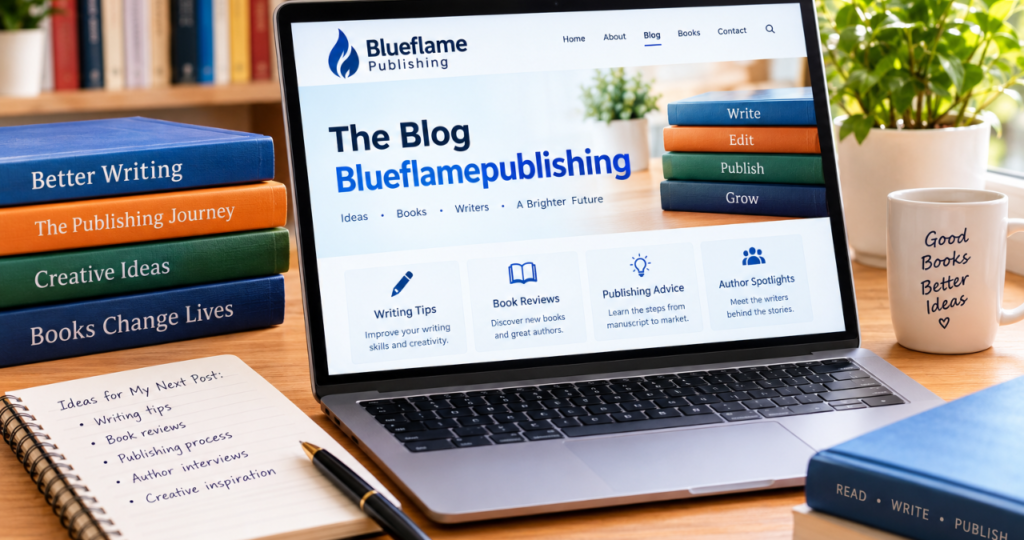
The blog blueflamepublishin Trust is especially important online. Anyone can publish information on the internet, so readers should learn to separate useful information from unsupported claims.
A high-quality publishing blog should aim to provide information that is:
- Clear
- Relevant
- Accurate
- Well organized
- Easy to understand
- Properly attributed when necessary
- Transparent about opinions and facts
For readers, checking the source is always a smart move.
If an article makes a major factual claim, readers should consider whether the information is supported by reliable evidence. When the subject involves publishing rules, legal matters, contracts, copyright, or money, readers should seek professional advice where appropriate.
The Importance of Author Experience and Expertise
Experience matters in publishing because the industry involves many different skills. Writing a book is only one part of the journey.
Other areas can include:
- Manuscript development
- Editing
- Proofreading
- Cover design
- Formatting
- Distribution
- Marketing
- Publicity
- Audience development
A knowledgeable publishing blog can explain these areas in language that ordinary readers can understand.
This is especially useful for beginners who may otherwise feel overwhelmed by industry terms.
For example, the difference between editing and proofreading may seem small, but the two activities have different purposes. Editing often focuses on structure, clarity, flow, and content. Proofreading generally focuses on finding final errors in spelling, grammar, punctuation, and formatting.
Small details can make a big difference.
The Blog Blueflamepublishing for Writers and Creators
The blog blueflamepublishin can be particularly interesting to people who enjoy creating written content. Writers need more than imagination. They also need discipline, patience, and a willingness to revise.
Writing a first draft is only the beginning.
A strong writing process may look something like this:
- Start with an idea.
- Research the subject.
- Create a basic outline.
- Write the first draft.
- Take a short break.
- Review the material.
- Improve weak sections.
- Check facts.
- Edit for clarity.
- Proofread the final version.
Of course, every writer has a different process. There’s no single magic formula that works for everyone.
The important point is that good writing usually develops through repeated practice and revision.
How Publishing Blogs Support New Writers
Starting as a writer can feel like standing at the edge of a huge ocean. There are countless possibilities, but it isn’t always clear where to begin.
Publishing blogs can provide direction.
For example, an educational article might explain the difference between traditional publishing and self-publishing. Another might discuss the importance of editing before submitting a manuscript.
New writers can also learn about common mistakes.
Some common problems include:
- Publishing too quickly
- Ignoring proofreading
- Using unclear language
- Failing to understand the target audience
- Expecting immediate success
- Neglecting book presentation
- Using unreliable information
- Giving up after early rejection
Learning about these challenges can help writers approach their goals with realistic expectations.
Traditional Publishing and Digital Publishing
The publishing industry has changed significantly with digital technology.
Traditional publishing generally involves a publishing company taking responsibility for selected books and handling various parts of the publishing process. Depending on the agreement, this can include editing, design, production, distribution, and marketing.
Digital publishing offers different possibilities. Authors can distribute ebooks and other digital materials through online platforms.
Self-publishing has also become an important option for many writers. It can give authors more control, but it also means they may need to manage or pay for services such as editing, cover design, formatting, marketing, and distribution.
There are advantages and challenges to every publishing model.
| Publishing Approach | Possible Advantage | Possible Challenge |
|---|---|---|
| Traditional Publishing | Professional publishing support | Competitive selection |
| Self-Publishing | Greater control | More responsibilities for the author |
| Digital Publishing | Easy online distribution | Strong competition for attention |
| Print Publishing | Physical reading experience | Production and distribution costs |
The best choice depends on the writer, project, goals, audience, budget, and experience.
Why Content Quality Is Important
A blog can have a beautiful design, but design alone doesn’t create trust. Content quality matters.
Readers usually want information that answers their questions without wasting their time.
Good articles tend to:
- Use useful headings
- Explain difficult ideas simply
- Avoid unnecessary repetition
- Include practical examples
- Keep paragraphs readable
- Use accurate information
- Distinguish facts from opinions
- Provide helpful context
A strong article should also respect its audience.
That means avoiding exaggerated claims, misleading titles, and information that cannot be supported.
The Role of SEO in Publishing Blogs
Search engine optimization, commonly called SEO, is another important part of modern blogging.
SEO helps search engines understand what an article is about. When done naturally, it can also help readers discover useful content.
Common SEO practices include:
- Using a clear title
- Choosing a relevant focus keyword
- Creating useful headings
- Writing descriptive content
- Using readable paragraphs
- Providing helpful answers
- Organizing information logically
- Avoiding keyword stuffing
For example, the phrase the blog blueflamepublishin should be used naturally when it is the intended focus keyword. Repeating a keyword excessively can make an article difficult to read and may reduce its quality.
The golden rule is simple: write for people first and search engines second.
How Readers Can Evaluate Online Publishing Information
Not every online article deserves the same level of trust. Readers should develop healthy habits when consuming information.
Before accepting an important claim, consider:
Who Wrote It?
Look for author information. An article written by someone with relevant knowledge may be more useful than an anonymous post.
When Was It Published?
Some information changes over time. Publishing platforms, technology, industry rules, and market conditions can evolve.
Is the Information Supported?
Look for evidence, references, official information, or clear explanations.
Is the Language Balanced?
Be cautious when an article promises guaranteed success or makes extreme claims.
Does It Match Other Reliable Sources?
Comparing information can reveal whether a claim is widely supported or merely an opinion.
These habits don’t mean readers should distrust everything. Instead, they encourage smart and responsible reading.
The Blog Blueflamepublishing and Creative Inspiration
Publishing isn’t only about business. At its heart, publishing is about ideas.
Books, essays, stories, poems, and other forms of writing allow people to share experiences and explore different perspectives.
A publishing blog can inspire creativity by discussing:
- Storytelling
- Reading habits
- Writing techniques
- Literary ideas
- Creative challenges
- Author experiences
- New publishing approaches
Sometimes one simple article can spark an idea for an entire story.
That’s the beauty of creative content: inspiration can come from unexpected places.
How Readers Can Get More Value From a Publishing Blog
Simply reading articles is useful, but active reading can be even better.
Readers can:
- Take notes on useful ideas.
- Save articles for later.
- Compare different viewpoints.
- Apply writing advice to their own work.
- Verify important facts.
- Discuss ideas with other readers.
- Create a personal reading list.
- Follow topics that match their interests.
For writers, keeping a notebook of useful lessons can be especially valuable.
One article may teach something about editing, another about storytelling, and another about publishing strategy. Over time, these small lessons can add up.
Common Mistakes to Avoid When Reading Publishing Advice
Even helpful publishing content should be approached thoughtfully.
One common mistake is assuming that one person’s experience applies to everyone.
Publishing journeys are different. A strategy that works for one author might not work for another.
Other mistakes include:
- Believing every success story is typical
- Expecting instant results
- Ignoring the importance of editing
- Treating opinions as universal facts
- Following outdated advice
- Spending money without researching services
- Assuming publishing success is guaranteed
Readers should remember that the publishing world has many variables.
Audience, genre, writing quality, market conditions, timing, promotion, and many other factors can influence results.
Why Clear Language Makes Publishing Content Better
Grade 7-level language doesn’t mean a subject has to be simple-minded. It means complicated information can be explained in a way that more people understand.
For example, instead of using unnecessary industry jargon, an article can explain a term and then use it naturally.
Clear language helps readers:
- Understand difficult concepts
- Remember important information
- Follow instructions
- Make better decisions
- Enjoy the reading experience
A good writer knows that fancy words aren’t always better words.
Sometimes the clearest sentence is the strongest sentence.
The Future of Publishing Blogs
The future of online publishing content looks promising because the way people discover information continues to evolve.
Artificial intelligence, ebooks, audiobooks, social media, newsletters, podcasts, and other digital tools are changing how writers and readers interact.
Publishing blogs may increasingly discuss topics such as:
- AI-assisted writing
- Digital book marketing
- Audiobook production
- Online author communities
- Newsletter publishing
- Content creation
- Digital reading habits
- New publishing technologies
However, technology doesn’t remove the importance of human creativity.
Readers still want meaningful stories, useful information, original ideas, and trustworthy voices.
Technology can change the tools, but the need for good content remains.
What Makes a Publishing Blog Valuable?
A valuable publishing blog isn’t necessarily the one with the most articles. Quality matters more than quantity.
Strong publishing content should aim to provide:
Accuracy: Information should be carefully checked.
Clarity: Readers should understand the main message.
Relevance: Articles should address real questions.
Originality: Content should provide a fresh perspective.
Practical Value: Readers should be able to learn something useful.
Trust: Writers should avoid misleading claims.
Consistency: A clear editorial approach helps readers know what to expect.
When these qualities work together, a blog can become more than a collection of articles. It can become a useful information resource.
A Simple Reading Strategy for Beginners
If you’re new to publishing blogs, don’t try to learn everything at once.
Start with the basics.
First, learn about writing and editing. Then explore publishing options. After that, study book design, marketing, distribution, and audience development.
A simple learning path could be:
- Understand the writing process.
- Learn basic editing.
- Explore publishing models.
- Study your target audience.
- Learn about book presentation.
- Understand distribution.
- Explore marketing.
- Track what works.
- Continue learning.
This approach makes the publishing world feel much less complicated.
The Difference Between Information and Professional Advice
One important point deserves attention: a blog can provide useful educational information, but it isn’t always a replacement for professional advice.
Publishing may involve contracts, copyright, taxes, business agreements, intellectual property, and other areas where professional guidance can matter.
For example, before signing a major publishing contract, a writer may benefit from qualified legal or publishing advice.
Similarly, financial decisions should be based on appropriate professional guidance rather than a general blog article.
A trustworthy reader knows when additional expertise is needed.
Building a Positive Publishing Community
Publishing becomes more meaningful when writers and readers can learn from one another.
Blogs can help create communities by encouraging discussion and sharing ideas.
A healthy publishing community can promote:
- Respectful conversation
- Constructive criticism
- Creative collaboration
- Reading recommendations
- Writing support
- Knowledge sharing
- Professional learning
Everyone starts somewhere. A beginner today may become an experienced writer tomorrow.
That’s why encouraging learning rather than judging mistakes can make online publishing spaces stronger.
The Long-Term Value of Learning About Publishing
Learning about publishing isn’t only useful for someone planning to release a book. The skills involved can benefit many areas of life.
Writing improves communication. Editing improves attention to detail. Research improves critical thinking. Reading improves vocabulary and understanding.
These skills can help students, professionals, entrepreneurs, creators, and everyday readers.
In other words, publishing knowledge isn’t locked inside the publishing industry. It can support personal and professional growth in many different ways.
Final Thoughts on the Blog Blueflamepublishing
The blog blueflamepublishin represents an interesting search topic for readers who want to explore publishing, writing, books, creativity, and digital content. While the exact material available on any particular publishing blog should always be checked directly through its official sources, the broader value of publishing blogs is clear.
They can help readers discover ideas, help writers understand the publishing process, and make complicated subjects easier to approach. With thoughtful reading and careful fact-checking, such resources can become useful parts of a person’s learning journey.
The publishing world may seem complicated at first, but it doesn’t have to remain that way. Step by step, readers can learn the language of publishing, understand different choices, improve their writing knowledge, and discover new creative possibilities.
Ultimately, the blog blueflamepublishing is best approached with curiosity, careful reading, and a willingness to keep learning. In a world filled with information, trustworthy, clear, and useful publishing content can help readers make sense of the journey—and perhaps even inspire them to begin creating something of their own.